Ritigala, Sri Lanka: Hanuman's Launch Point Back to India
Ritigala is identified in Ramayana tradition with Aristha, the mountain described in the epic as Hanuman's launch point for his leap back to South India after locating Sita in Lanka -- the return half of the same crossing that Mahendragiri, on the Tamil Nadu coast, marks as the departure point going the other way.
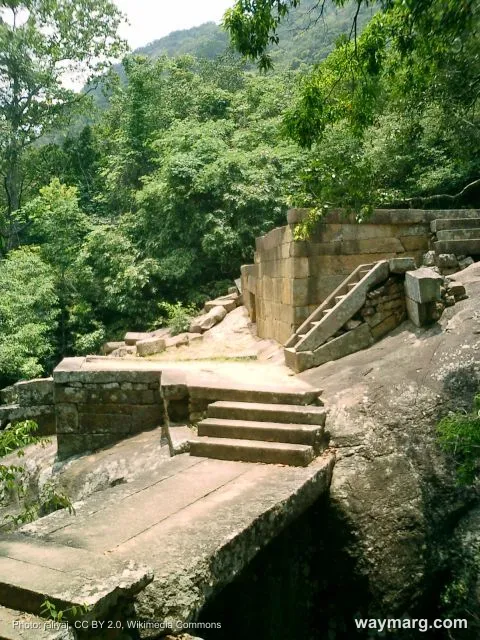
The mountain also carries a separate, genuinely ancient layer: a Buddhist monastic complex with ruins and inscriptions dating to the 1st century BCE, built for the ascetic Pansukulika monks. One popular telling also ties Ritigala to the Sanjeevani-herb mountain fragment Hanuman carried from the Himalayas to heal the wounded Lakshmana -- though it's worth noting Wikipedia's own page on Ritigala tells a different, unrelated herb legend instead. Both versions circulate; this page flags that rather than picking one as settled.
- Country: Sri Lanka (Anuradhapura district)
- Site type: Strict Natural Reserve + ancient monastery ruins
- Best months: Outside the heaviest monsoon rains; check locally
- Minimum time: 2–3 hours
- Suitable for: Travellers wanting a quieter stop off the main Kandy/Ella/Trincomalee leg
Two Stories, One Mountain
Independent of the Ramayana layer, Ritigala's Buddhist history stands on its own -- a Lanka Vihare founded in the 2nd century BCE and a 9th-century CE monastic complex, though very few traditional icons remain: no bo tree or stupas, just a handful of broken granite Buddha statues in caves.
A Reserve, Not an Open Site
Declared a Strict Natural Reserve in 1941, Ritigala is entered through a Department of Archaeology office near the Banda Pokuna reservoir at the base, with resident guides typically available there.
Visiting
A Sri Lanka ETA is required for all visitors (apply at eta.gov.lk). Habarana, about 15 km away, is the practical base -- Dambulla, Sigiriya, and Anuradhapura are all within comfortable range for combining this into a North Central Province itinerary.
Ready to plan your trip?
Build a day-by-day itinerary with WayMarg — explore routes, nearby food and stays, collaborate with family, and export your trip. No sign-up needed.
Plan My Trip →